The Ultimate Setup Guide for Your Smeg Mini Milk Frother
For home baristas who value both performance and aesthetic, the Smeg Mini Milk Frother is a compact option that blends retro styling with everyday utility. This guide walks through unpacking, setup, practical use, cleaning, and tips to get the most consistent foam for coffee, tea, and specialty drinks. It also provides an analysis of the frother’s strengths and limitations, a comparison to common alternatives, and a focused buying guide for prospective shoppers.
Introduction
The Smeg Mini Milk Frother appeals to buyers who want an attractive, easy-to-store tool for single-serve frothing without the footprint of a full electric milk frother. It is typically a handheld, battery-operated frother designed for quick morning routines and occasional specialty drinks. This article covers the practical setup steps, evaluates day-to-day performance, highlights what buyers usually care about (build quality, motor strength, ease of cleaning, and color/finish), and offers actionable tips to improve results with different milk types and recipes.
Unboxing and Initial Setup
Out of the box, the Smeg Mini Milk Frother generally includes the frother handle with a removable whisk attachment and basic documentation. Before the first use, follow these simple steps to prepare the unit:
Step-by-step setup
- Inspect the package: Confirm the whisk is present and the handle is free of visible damage.
- Install batteries: Many mini frothers are battery-powered — check the manual for the correct type and orientation. Remove any plastic insulation tabs that prevent battery contact.
- Wash the whisk: Rinse the stainless whisk under warm water with mild detergent, then dry thoroughly. Avoid immersing the motor handle in water.
- Test run: With the whisk attached, operate the frother briefly over the sink to confirm the motor runs smoothly and to remove any factory residue.
- Read safety notes: Note manufacturer recommendations about not running the motor continuously for long periods and avoiding immersion of the handle.
Design and Build Quality
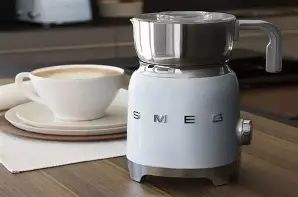
Smeg products are known for their mid-century-inspired aesthetics, and the mini frother follows that tradition with soft colorways, chrome accents, and a compact cylindrical handle. Beyond looks, buyers should consider materials and ergonomics:
- Handle and finish: The handle typically uses a glossy painted finish or metal-plated band. The handle is slim enough for one-handed use and comfortable for repeated short operations.
- Whisk material: The frothing head is normally stainless steel — durable and rust-resistant if dried properly.
- Size and storage: Its compact form factor makes it easy to store in a utensil drawer or hang on a small hook in tight kitchens.
Performance Analysis
Performance evaluation focuses on froth quality, motor strength, noise, and versatility with different liquids.
Froth quality
The Smeg mini frother excels at producing aerated foam for single servings. With fresh cold milk, it can create microfoam suitable for cappuccinos and lattes when combined with properly heated milk (see technique below). For cold drinks and protein shakes, it makes a dense foam quickly. Users should not expect café-grade latte art from a handheld frother—those results require more advanced steaming equipment—but a creamy textured foam for topping beverages is achievable.
Shop the latest Electronics picks on Amazon.
Browse Now →Motor strength and speed
The motor is tuned for brief high-speed bursts to aerate milk efficiently without being overly noisy. For most household tasks—frothed milk, mixing matcha, emulsifying small quantities of sauces—the motor performs reliably. Buyers concerned with very frequent or commercial-scale use should opt for a countertop electric frother or steam wand instead.
Noise level
Handheld frothers typically produce a gentle whirring sound during operation. The Smeg mini is within the expected range: audible but not disruptive in a home kitchen. Noise levels may increase as batteries drain or if the whisk is bent or obstructed.
Versatility
Beyond milk, the frother is useful for mixing single-serve protein shakes, emulsifying vinaigrette, dissolving powdered drinks, and whisking eggs for small batches. It is not intended for heavy-duty blending or continuous operation for extended periods.
Real-world Use Cases
- Busy morning coffee: Prepare a quick cappuccino by frothing cold milk, heating separately, and pouring over espresso.
- Office or travel: Compact size makes it handy for a desk drawer or small travel kit—battery-powered models allow use where outlets are scarce.
- Small households and renters: Ideal for people who want a single-serve solution without a bulky appliance.
- Cold foam and iced beverages: Create creamy cold foam for iced lattes or cold brew topping without heating milk.
- Culinary uses: Emulsify small dressings, blend powdered drink mixes, and aerate scrambled eggs for fluffier texture.
Technique: Getting the Best Foam
Technique dramatically affects results. Follow these practical tips to improve froth quality across milk types:
- Use cold milk for best aeration: Cold milk gives more volume during frothing; heat after to reach serving temperature if desired.
- Choose the right milk: Whole milk produces rich, creamy foam; skim milk creates larger volume and lighter foam; barista blends and many oat milks froth well due to added stabilizers. Almond and soy can be hit-or-miss depending on formulation.
- Measure for consistency: For handheld frothers, small volumes (single-serve) work best. A typical range is a few ounces up to ~200–250 ml; leave headspace for foam expansion.
- Angle and depth: Place the whisk just below the surface and angle slightly to encourage air incorporation. Start near the surface, then move deeper to swirl the milk and integrate larger bubbles.
- Short bursts: Use 10–15 second bursts rather than continuous running to avoid overheating the motor and reduce splashing.
- Tap and swirl: After frothing, tap the container lightly on the counter to collapse large bubbles and swirl to achieve a uniform texture.
Cleaning and Maintenance
Ease of cleaning is a major consideration for routine use. The whisk can usually be rinsed under warm water with dish soap immediately after use to prevent milk residue from drying. Important maintenance tips include:
- Do not immerse handle: Wipe the motor housing with a damp cloth; never submerge in water.
- Remove whisk for thorough cleaning: Detach and hand-wash the whisk; dry thoroughly before reattaching to prevent corrosion at the joint.
- Battery care: Remove batteries if the frother will not be used for an extended period to avoid leakage.
- Check for wear: Replace the whisk if it shows deformation or kinks that affect performance.
Durability, Warranty, and Customer Concerns
Potential buyers often ask about longevity, replacement parts, and after-sales support. The Smeg brand typically backs its small appliances with a manufacturer warranty; however, specifics vary by region and model. Common buyer concerns and practical advice:
Discover deals on Electronics — updated daily.
View Offers →- Battery life: Battery consumption depends on frequency and duration of use. Keep spare batteries on hand if used daily.
- Replacement parts: Whisks are sometimes sold separately by manufacturers or third-party suppliers. If a whisk bends, replacing it restores performance.
- Service and warranty: Check the included paperwork for warranty length and registered service centers. Retain the purchase receipt and serial number for claims.
Pros & Cons
- Pros
- Stylish design that complements modern and retro kitchens
- Compact footprint; easy storage and travel-friendly
- Quick single-serve frothing for coffee and cold drinks
- Simple one-button operation — low learning curve
- Multi-use for mixing and emulsifying small quantities
- Cons
- Not intended for commercial or heavy continuous use
- Battery-powered models require periodic battery replacement
- Limited capacity — best for single cups, not large batches
- Cannot heat milk; heating must be done separately
- Performance varies with plant-based milks; some recipes require experimentation
Comparison Table
| Feature | Smeg Mini Milk Frother | Basic Handheld Frother (generic) | Electric Standing Frother (countertop) |
|---|---|---|---|
| Design | Stylish retro finish, compact, premium feel | Functional, often plastic, minimal styling | Bulky but professional-looking; countertop presence |
| Power source | Battery-operated (portable) | Battery-operated or USB | AC-powered (plug-in) |
| Heating | Does not heat | Does not heat | Many models include heating function |
| Capacity | Single-serve focused | Single-serve focused | Can froth multiple cups or larger volumes |
| Cleaning | Detachable whisk; hand wash required | Detachable whisk; hand wash required | Often non-stick jugs; some parts dishwasher-safe |
| Best for | Design-conscious users, small kitchens, travel | Budget shoppers, occasional use | Regular home baristas, larger households |
Buying Guide: What to Look For
When selecting a mini milk frother, prioritize the attributes that match real-world needs. Buyers typically care about appearance, reliability, and how the frother integrates into their daily routine.
Key factors
- Power delivery: Battery vs rechargeable—batteries are convenient but require replacements; rechargeable models add upfront convenience but may cost more.
- Whisk quality: Stainless-steel whisks are durable; look for tight coils that create finer foam.
- Ergonomics: A comfortable grip and well-placed button improve usability during repeated short cycles.
- Noise and vibration: Read user feedback about noise levels and whether the handle vibrates excessively.
- Brand support and warranty: Check the warranty period and availability of replacement whisks or service centers.
- Color and finish: For many buyers, aesthetic alignment with kitchen appliances is a deciding factor. Choose a finish that complements other items in the space.
- Price vs. frequency of use: For daily use, invest in a higher-quality, possibly rechargeable or countertop model; for occasional use, a stylish battery-operated frother may be ideal.
Questions to ask before buying
- How often will it be used and for what drinks?
- Will battery replacement be an inconvenience?
- Is the user comfortable heating milk separately?
- Is the countertop space limited and is storage a priority?
Troubleshooting Common Issues
Even straightforward gadgets can have hiccups. Here are quick fixes for common problems:
- Weak froth: Replace batteries or ensure fresh ones are installed; use cold milk and correct volume; make short bursts and position whisk properly.
- Whisk wobble: Check that the whisk is firmly attached; replace if bent.
- Excessive noise or vibration: Stop and inspect for obstructions; ensure whisk is not bent; check battery tightness.
- Milk taste from residue: Clean whisk immediately after use; deep clean with warm soapy water if film develops.
Environmental and Practical Considerations
Small appliances contribute to household waste over time. Buyers may consider the following to reduce environmental impact:
- Choose rechargeable models when available to reduce single-use battery waste.
- Keep spare whisks and seek replacement parts to extend the frother’s life rather than discarding a whole unit.
- Recycle batteries responsibly and follow local disposal guidelines for electronic waste.
Conclusion
The Smeg Mini Milk Frother is a compelling choice for those who want a balance of form and function in a compact tool. It suits single-serve coffee lovers, design-conscious buyers, and anyone who needs a quick, portable way to add foam to beverages. While it does not replace the capabilities of a countertop frother with heating or a steam wand used in cafés, it offers reliable, attractive performance for everyday home use. With the right technique—cold milk, proper volume, and short bursts—a handheld frother like this can produce creamy foam that elevates morning coffee, iced drinks, and a range of culinary tasks. Prospective buyers should weigh battery convenience against long-term use needs and consider warranty and replaceability when making a purchase decision.